Call me Ms. Pac-Man

The thing about being really sick and not getting answers while watching your life get stolen piece by piece is, you eventually start believing you’re crazy. I felt ashamed telling even the people closest to me about my symptoms. “I can’t make it because I’ve had diarrhea every day for years” and “My arm is semi-numb and also burning and pins and needles?” sounds like bullshit at best, insane at worst. Or maybe I’ve just been too hard on myself.

“That’s a lot of alarms,” Mike said, nodding at my phone.

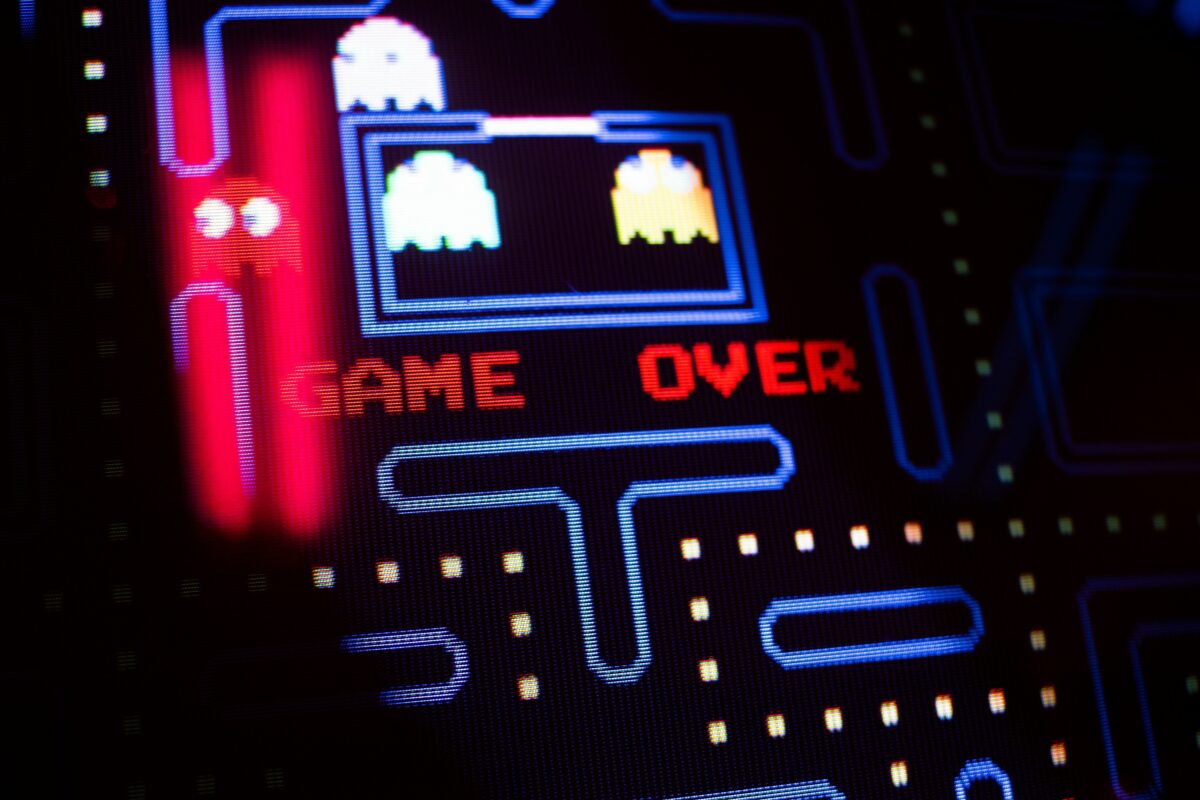
“I know, right? They’re for all my meds throughout the day. I feel like Ms. Pac-Man. All I do is take pills and eat fruit.”

Last month, a few days after Sandy my best friend of 22 years died, my neuromuscular specialist sat me down and told me I have dysautonomia. Basically my lupus gremlin is doing a lot of gremlin-ing and my nervous system is shot. This wasn’t really news; she suspected it from the moment we met. The big news was that my insurance won’t cover IVIg, which she thinks would be incredible for me.

As a consolation prize, I’m on dozens of medications that I take all throughout the day. It’s a lot… but they help. I’m also vindicated, because dysautonomia causes some wild issues throughout the nervous system, things that I mentioned to doctors over the years, things that were often brushed off, making me feel crazy.

The thing about being really sick and not getting answers while watching your life get stolen piece by piece is, you eventually start believing you’re crazy. I felt ashamed telling even the people closest to me about my symptoms. “I can’t make it because I’ve had diarrhea every day for years” and “My arm is semi-numb and also burning and pins and needles?” sounds like bullshit at best, insane at worst. Or maybe I’ve just been too hard on myself.

I’m practicing being more gentle with myself. I’ve been struggling for so long, without the right supports, so it might take a little while to undo all the mental and physical damage. Once the dust settles, I’m not sure what my life will look like, exactly, but I’m hopeful.

My stamina is still pretty shot, so I’m doing everything in little bursts. Even the simplest tasks take forever, and that triggers my flareup trauma a bit. On the plus side, I learned to do things in stages during previous flares, so at least I know how to do this. Now I’ve got a pharmacy worth of medications in my arsenal, and I know what’s causing these symptoms, so it’s not as scary when I almost pass out because I apparently stood up too fast/long, or take a mandatory nap because every muscle just tapped out and I go sleep right here. I also have the right team now, with referrals to more services and specialists.

Knowledge is power. I don’t have to fumble in the dark anymore. And if I see any ghosts, I just eat ’em.

In Case You Missed It…

  • ElizabethBarone.com is now on its own hosting! I’m really proud of how smoothly the move went, considering I haven’t migrated a website in a while. Some content is unavailable while I update links and things, mostly because I’m slow. If you notice anything wonky, give me a shout!
  • MaiettaInk.com is back (ish), baby! Because of my new hosting plan, I can relaunch my shop. Signed paperbacks, stickers, and more coming soon…
  • My free reader newsletter and premium serial edition subscription are currently down, just for a bit while I get all that set up again. I believe everything should resume seamlessly… but gremlins hide in websites, so cross your fingers!

Much love,
EB


Photo by Sei on Unsplash

Winter’s getting on my nerves, literally

Every time my lupus flares, it does so with a chef’s special, a new or worsened symptom I already had that becomes the showstopper. 2020 gave me flare a la pleurisy; 2025 is serving peripheral neuropathy. Bon appetit.

I almost made it through this winter without prednisone—almost! It’s okay, though, because it’s still another winter I’m on less steroids, another winter without chemo entirely. For me, that’s a major win. Go Benlysta!

Peripheral neuropathy is hard to manage, I’m finding. Mine presents mostly as fiery pain in my hands and feet, with tenderness in my fingertips that defies all reason, the same treatment in my toes, swelling too, and pins and needles, and coldness. It also causes balance issues. It really makes me miss amitriptyline—but not enough to die. 🙃

Since my labs are okay, I’m managing it with a course of steroids, round-the-clock Tylenol, Motrin 800, and medical cannabis, and lots of rest. I’ve also recently cut out carbs almost entirely, which weirdly has made a huge difference in my overall pain and energy levels (until winter really got going here). I’m not allergic to gluten, so I’m not sure why this works, and I’m not asking any questions, either. I’m just saying no to the carbs.

It’s frustrating because things change so fast for me, especially during the colder months. I’d just gotten into a groove, after having just gotten into another groove interrupted by renovations, and the only thing I’ve found to be true with chronic illness—especially when it’s a dynamic disability you’re dealing with—is that the game is constantly changing, and I’ve gotta be ready to trade the system I just created for myself for a whole new system. Or go into flare survival mode, a place that I simultaneously appreciate and hate.

It forces me to focus on what’s really essential. It also makes me look forward to when the flare will pass. Even pleurisy didn’t last forever; I’ll never forget the moment I realized I could take a full breath without excruciating pain. I still get twinges of chest pain, but usually only when I’ve overdone it or I’m too cold.

This will pass, too.


Photo by Girl with red hat on Unsplash

NaNoWriMo canceled

I’m so out of the loop since I left social media (and I like it that way, far less stress from all the drama). I was quite surprised to learn today that the organization National Novel Writing Month (NaNoWriMo) has been canceled.

It seems like a lot of things contributed to a mass exodus of support from authors and board members, including allegations of: no background checks on municipal liaisons (MLs), MLs engaging in child grooming and bullying, and the organization’s advocacy for the use of A.I. to generate manuscripts.

I haven’t participated in a NaNoWriMo since, well, my everyday became NaNoWriMo. While the contest—which encourages writers to write a 50,ooo-word manuscript in 30 days—helped me jumpstart my writing routine, I haven’t advocated for that pace in quite a long time. It doesn’t work for me, and I find the “write fast, publish faster” mentality toxic for a lot of reasons. In the last few years, I’ve opted for sustainability and a holistic approach with my own writing, prioritizing my mental and physical health over my word count.

Still, it’s sad to see what NaNoWriMo has become.

I had a fantastic experience with both the organization and local chapters during the years I was active. I found the writers it attracted to be supportive and encouraging. I still see my old ML in writer-ly events around our state, and it’s always lovely to chat with her. That doesn’t mean that NaNo could never attract people with malignant intentions, though. It’s upsetting that the organization would protect child predators. Unfortunately that just seems to be the way of things (I’m lookin’ at you, Catholic church and Hollywood). Our culture talks a lot about the children, but actually does very little to protect them.

I’m still grateful for everything I’ve learned from participating in past years. I still enjoy chatting with the writers I met. Hell, I even still look back on those early novels I wrote with nostalgic fondness. What NaNo’s bitter end does for me, though, is reinforce my belief in sustainability rather than burnout, and building a holistic writing life rather than running myself into the ground.


Photo by Sixteen Miles Out on Unsplash

3 mental health books that saved my life

Maybe it’s a bit dramatic to say these books saved my life, but they kinda did. They gave me invaluable tools to cope with my complex PTSD while I’ve been unable to get back into therapy. I still believe that everyone can benefit from therapy, but unfortunately not everyone has access to it. If that’s the case for you, I hope these books will help.

Taming Your Outer Child / Susan Anderson

This book started it all for me. Anderson’s methods might seem a bit silly at first, but once I got past that, I learned how to separate my various selves, communicate better with myself from my highest self, and unpack my self-sabotaging behaviors. Once I finished the book, I no longer felt any need to write letters to my Inner or Outer Child, but now I occasionally write letters to and from my adult self. The self-communication skills that you’ll gain from this are so worth it; a lot of us trauma survivors have no idea what our wants, needs, or drivers are, and this book cleverly shows you how to figure that out.

Adult Children of Emotionally Immature Parents / Lindsay C. Gibson, PsyD

In my parents’ defense, they were literal teenagers when they had me. So I mean absolutely no disrespect. I love my parents and I know they love me and did their best, and yet I had a lot to unpack in adulthood, a lot of behaviors I picked up as a way to cope with not only my childhood but also multiple traumas that occurred. This book helped me see things from a whole new perspective, and gave me tools I desperately needed to shape the adult I wanted to become. I’ve been operating from a place of trauma-based fear, and this book helped me both see the areas in which I’m emotionally immature and how to reparent myself. It’s less about blaming your dysfunctional parents/family for all your problems, and more about stepping into yourself and healing.

How to Do the Work / Dr. Nicole LePera

How to Do the Work felt like the natural next step. I actually had it quite a while before I even started “Emotionally Immature.” They say that books come to you when you need them most, and I’ve found that to be so true. Maybe it was the universe guiding me, or maybe deep down I just knew I needed to ease into all this shadow work. It sure isn’t easy, facing yourself! Dr. LePera AKA The Holistic Psychologist on Instagram gently guides you through the process, while sharing her personal story as well as her clients’ stories. This book helped me build upon the things I learned from the other two, plus gave me some new insights.

I don’t think you necessarily have to read and work through all three of these books or in this exact order; you can start with whichever speaks to you most and go from there.

I hope these books help you! Please let me know if you try them. And if you have any mental health books you found helpful, please share them!


Photo by sydney Rae on Unsplash

I’m on Kobo Writing Life!

This is a “pinch me” moment, for sure.

This week, I’m a guest on the Kobo Writing Life podcast! I’ve been listening to KWL for years while building my writing career, never imagining that one day I’d be listening to myself. Craziness!

Thank you so much to Rachel, Vanessa, and both the KWL and Kobo Originals teams for this incredible opportunity. I was so nervous going in, because I knew I needed to talk about mental health in the writing community, but it can be really tricky doing so. I once approached a mod in a writers’ forum about starting a thread, and she DMed, “We so need to talk about this stuff—I’ve struggled with mental health, too, even had to take a break—but we don’t talk about that here.” Well, where else are we supposed to talk about it, if not in the same chat rooms we discuss writing while flexing our substance abuse issues? 🤦🏻‍♀️

Thankfully KWL practices what they preach. Kobo truly supports authors, and I’m so grateful for them sharing their platform with me and letting me talk about this important issue.

You can listen everywhere podcasts are available.

I’ve Been Publishing for 10 Years! Here’s What I’ve Learned

On October 11th, 2011, I published my award-winning short story, “Moon Prayer,” to the Kindle and Smashwords stores. Only a handful of people bought the ebook edition, but I was hooked. Over the next 10 years, I chased my next high over and over.

My first ever signing, sometime in spring 2012.

Writing is my addiction. It’s also the way I figure out the world, and myself. Hemingway once said, “There is nothing to writing. All you do is sit down at the typewriter and bleed.” He was right. Writing is my release; after the gush and then stanch comes the rush of endorphins.

In the 10 years since I started this journey, if I’ve learned one thing, it’s that this career is not romantic or glamorous—it fucking hurts. To survive, you have to be strong and resilient. It helps if you’re really stubborn. It really helps if you’re a little crazy. Most days, I don’t even know why I’m still going at it. So many writer friends have disappeared, never to publish again, because the mental toll is too expensive.

It scares me, that something I love could destroy me.

But then I remember why I write: for me. I write the kinds of books I want to read. I’ve been entertaining myself with stories for as long as I can remember. Some of my favorite memories are the elaborate soap operas my sister and I played out with our action figures. (We had a whole tiny town built out of shoe boxes, doll houses, and chairs, full of all these characters with individual backgrounds and lives.) Eventually I taught myself to type on my mom’s word processor, and I started writing fiction. (I still don’t type properly today.)

I started writing for me, but other people really like my stories. It’s hard for me to find readers, because I’m not writing for the standard person. I’m writing for the people like me: the outcasts, the black sheep, the ones who paved their own road.

So, on my 10-year anniversary, I give myself the gift of a new manifesto. This list is for me, but maybe it’ll resonate with you. Take what you need and leave the rest.

  • Don’t give away everything.
  • Learn the rules of your genre, and then break them in ways that make sense.
  • Protect yourself, your IP,  your privacy, and your mental health.
  • Figure out what you do best, then keep doing it.
  • Ads don’t work for all books, or even all authors.
  • Build and manage your own ARC team.
  • Don’t forget about local readers.
  • Make your newsletter your #1 marketing priority.
  • Set yourself up for success.
  • Let go of the things you can’t control.

My most recent signing, at RomantiConn 2019.

A Note on Making Money: Every author wants to know to make a living from writing. There’s no timeline or instruction manual that fits everyone. I’m still trying to figure out how to do it; I came close in 2019 when I released A Risky Prospect. There are so many factors involved, and even two authors writing the same sub-genre and tropes are going to have completely different career experiences. It can be maddening, so try not to compare yourself to others. That’s easier said than done, and I know it also sounds like a cop out. But there truly is no secret, one-size-fits-all answer. It’s something you have to figure out as a business, through time, experimenting, and commitment.

A Note on Burnout: This gig is stressful. I’ve seen a lot of authors come in hot, publishing and rising fast, and then crashing just as quickly. Make sure you’re pacing yourself. Make sure you’re refueling your soul. Make sure you’re on top of your mental health. Set your expectations and goals at a reasonable place, with actions you can actually control (like “I will write and publish this book by this date,” instead of “I will make this book a bestseller that pays my bills”).

Writing isn’t just a career; it’s who we are. The world needs us because we put into words the things that many people can’t say. We tell it like it is, and we build a better tomorrow, all with the power of our words.

I don’t know what the next 10 years hold for me, but I hope they give me 10 more things I’ve learned and dozens more books on the shelf under my name.